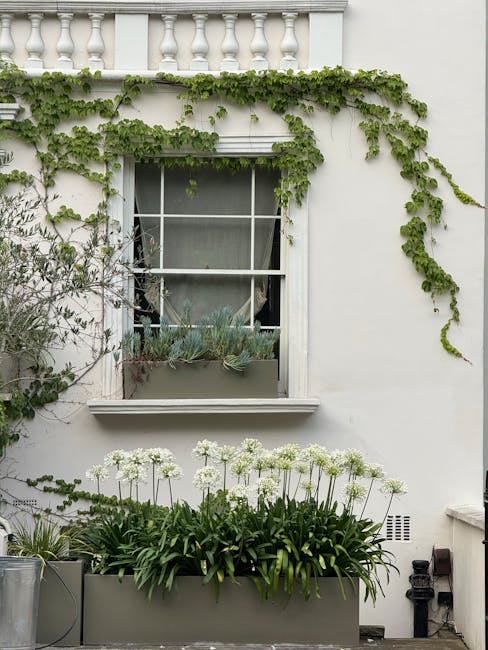
Southgate Road balcony garden guide by De Beauvoir Town gardeners

Balcony gardening sounds simple until you stand outside with a pot in one hand, a bag of compost in the other, and a very real North London breeze trying to change your mind. That is exactly where a Southgate Road balcony garden guide by De Beauvoir Town gardeners earns its keep. It is not about cramming plants into every corner. It is about creating a small outdoor space that feels calm, livable, and properly suited to the realities of a balcony: limited weight, changing light, wind, and the odd dry spell when you forget to water for a day or two. We see this kind of project as part design work, part plant care, part common sense. And, to be fair, that mix is what makes it work.
In this guide, you will find a practical framework for planning, planting, and maintaining a balcony garden that suits Southgate Road homes and the wider De Beauvoir Town area. We will cover what makes balcony gardens different, how to choose plants and containers, which mistakes to avoid, and when to bring in a professional hand. If you want something beautiful but realistic, this is the place to start.
Why Southgate Road balcony garden guide by De Beauvoir Town gardeners Matters
Balconies in this part of London often work hard. They are part utility space, part escape route, part storage area, and occasionally a place for one lonely chair that has seen better days. A balcony garden changes that. It gives you a pocket of green that softens hard edges, reduces visual clutter, and makes a flat feel more personal.
The main reason this guide matters is simple: balcony gardening is more technical than many people expect. A ground-level garden can usually tolerate heavier pots, larger shrubs, and more ambitious layouts. A balcony has other rules. Weight matters. Drainage matters. Wind exposure matters. Privacy matters too, especially where neighbouring balconies look directly into your space. A good design has to solve all of that without feeling overworked.
There is also the human side. A well-planned balcony can change how you use your home. You might drink your morning tea outside again. You might read there on a grey Sunday. You might even start growing herbs and save yourself a few rushed trips to the shop. Small thing? Maybe. But small things shape daily life. That is the point.
If you are also thinking about bigger outdoor improvements elsewhere in the home, it can help to browse related ideas such as starting a container garden the right way or how vertical gardening can make compact city spaces feel larger. Those approaches often work hand in hand with balcony schemes.
How Southgate Road balcony garden guide by De Beauvoir Town gardeners Works
A balcony garden works best when it is planned in layers. Think of it as a sequence rather than a shopping list. First comes assessment. Then structure. Then planting. Then maintenance. That order matters because a pretty balcony that leaks, overheats, or feels cramped is not really a success. It is just a nice-looking problem.
1. Assess the space honestly
Start with the basics: size, access, rail height, sunlight, and how much weather the balcony takes. South-facing balconies usually get more sun and dry out faster. North-facing balconies may be cooler and better for shade lovers. If the balcony is exposed, wind can turn lightweight pots into little troublemakers, so it is worth thinking about shelter before you buy plants.
2. Match the structure to the load
Balconies are not the place for guesswork. Heavy planters, large ceramic pots, wet compost, and water-filled trays all add up. A safer design uses a mix of lightweight containers, compact plants, and vertical features that create height without creating excess weight. If you have any doubt about load-bearing capacity, the sensible move is to keep the scheme light and modular.
3. Design for use, not just display
Do you want a place to sit? A screen from neighbours? A mini herb patch? Or a soft green view from inside the flat? Once you know the main job, everything else gets easier. For example, a balcony meant for evening sitting may need a foldable bistro table and cooler-toned planting, while a privacy-led balcony may rely more on tall container plants and climbers.
4. Choose plants for balcony conditions
Balcony plants should cope with life in containers. That means resilience, manageable size, and a tolerance for temperature swings. Herbs, compact grasses, pelargoniums, ferns, dwarf shrubs, and some climbers can do well. If you want year-round cover, evergreen structure is useful, but only if it stays in scale. A balcony can quickly go from peaceful to overcrowded, and nobody wants that.
5. Build in maintenance from day one
The best balcony gardens are the ones you can actually keep up. A simple watering routine, easy-access containers, and a mix of seasonal interest will save you grief later. If you already know that time is tight, a lower-maintenance approach is often the smarter investment. There is a useful discussion of that mindset in these low-maintenance gardening tips.
Key Benefits and Practical Advantages
A balcony garden delivers more than good looks. When it is built properly, it improves how the space functions as well as how it feels.
- Better privacy: taller planting, trellis systems, and containerised screening can soften sightlines from nearby windows or balconies.
- Improved atmosphere: plants absorb noise visually, if that makes sense, and create a calmer feel even in busy streets.
- More usable outdoor time: a tidy balcony feels inviting, so you are more likely to step outside and use it.
- Flexible design: containers can be moved with the seasons or reconfigured if your needs change.
- Low commitment if planned well: compared with larger garden projects, balcony schemes can be refined gradually.
- Better microclimate: plants can provide a small amount of shade, reduce glare, and take the hard edge off bright brick and metal surfaces.
One of the quiet benefits is psychological. Green space close to the living area often makes a flat feel less boxed in. It is subtle, but you notice it on a rainy morning when the room looks out onto something alive rather than a blank railing and a dustbin. Honestly, that matters.
For people interested in ecological value as well as comfort, the broader idea of greener urban living is worth exploring in this piece on gardening, climate health and sustainability.
Who This Is For and When It Makes Sense
This guide is useful if you live in a Southgate Road flat, own a rental property with a balcony, or manage a small outdoor space that never quite feels finished. It is also a strong fit if you want a bit of greenery without committing to a full garden redesign.
It makes sense when:
- your balcony feels bare, overlooked, or underused
- you want privacy without installing bulky permanent structures
- you need a design that handles wind and limited sunlight
- you would like herbs, flowers, or foliage close to the kitchen or living room
- you want a relaxing spot that does not require constant upkeep
- you are working to a budget and need the most visible improvement per pound spent
It is less suitable if your balcony has structural concerns, severe exposure, or restricted access that makes maintenance awkward. In those cases, the smart first step is an assessment rather than a shopping spree. That sounds obvious, but people skip it all the time.
If you are in the very early stages of gardening and want a confidence boost, practical tips for new gardeners can help you avoid the usual beginner wobble.
Step-by-Step Guidance
Here is a sensible way to build a balcony garden without overcomplicating it. Keep the steps in order. It saves time, money, and a few bruised knuckles.
- Measure and map the balcony. Note width, depth, door swing, railing position, and any awkward corners. Leave enough room to move safely.
- Check sun and wind patterns. Watch the space at different times of day. Morning light, late afternoon sun, and gusty spots all change plant choices.
- Decide the main purpose. Privacy, dining, herb growing, relaxation, or a mix? Pick the primary use first.
- Choose a light but stable layout. Use railing planters, wall-mounted features where appropriate, and a few grounded containers rather than too many bulky pots.
- Select your plants. Choose species that suit your conditions rather than your wish list alone. This is where many schemes go sideways.
- Use good compost and drainage. Container planting needs a quality growing medium and pots with proper drainage holes.
- Add one focal point. A feature chair, a statement planter, a compact olive, or a small herb shelf can give the space structure.
- Finish with practical details. Watering access, saucers, ties, and a storage solution for tools all help the scheme stay tidy.
A quick example: a north-east facing balcony with medium wind exposure might suit ferns, heuchera, hedera, compact sedges, and a few herbs in sheltered positions. A south-west balcony with strong sun may need lavender, rosemary, thyme, and containers that do not bake dry by midday. Same city, different answer. That is the beauty and frustration of it.
Expert Tips for Better Results
The difference between an average balcony and a genuinely good one usually comes down to details. Not flashy details. The boring sort, which is often how real progress works.
- Go vertical, but keep it tidy. Wall planters and trellis supports can create height without crowding the floor. If you want more inspiration, evergreen climbers for shady corners are worth a look.
- Balance soft and hard surfaces. A little timber, wicker, or textured ceramic can stop the balcony feeling too sterile.
- Group pots by watering needs. This is one of the simplest time-savers, and it prevents one plant from drowning while another dries out.
- Use repetition. Repeating two or three plant types gives a small space calm and visual order.
- Think about winter from the start. Many balcony schemes look great in June and fall apart by January unless they include structure and protection. For seasonal resilience, winter plant protection ideas are genuinely useful.
- Choose containers with a purpose. Tall pots can screen views; wide pots can anchor corners; narrow troughs can edge a railing line neatly.
A small but useful trick: place your most delicate plants near the balcony door or a sheltered wall, where they are easier to water and inspect. You will notice problems earlier there. That sounds minor, but it saves plenty of disappointment.
Common Mistakes to Avoid
Balcony gardening mistakes are rarely dramatic. They are usually cumulative. A pot too heavy here, a plant too thirsty there, and suddenly the whole thing feels tired.
- Overloading the balcony. Heavy stone pots look impressive, but they are often unnecessary and awkward to move.
- Ignoring wind. Wind can shred leaves, tip containers, and dry compost faster than expected.
- Choosing plants for looks alone. A plant that thrives in a sheltered border may sulk on a windy balcony.
- Skipping drainage. Standing water in a container is a recipe for root stress.
- Buying too much at once. It is tempting. We have all done it. The result is often clutter rather than style.
- Forgetting access. If you cannot reach the back row of pots, you probably will not maintain them properly.
- Letting privacy planting become a wall. Green screens should feel soft and breathable, not like you are sitting inside a hedge box.
One more thing: do not treat your balcony like a miniature version of a full garden. It is its own environment. Different rules, different opportunities. Once you accept that, the design choices get easier.
Tools, Resources and Recommendations
You do not need a shed full of kit to make a balcony garden work. A small, reliable set of tools is better than a drawer full of gadgets you never use.
- Lightweight pots and troughs: easier to move, easier to clean, easier on the balcony structure.
- Quality compost: container plants depend on good growing medium, not just fertiliser.
- Watering can with a narrow spout: useful for precise watering without soaking the floor.
- Hand trowel and small fork: enough for planting, top-ups, and tidying roots.
- Securing ties and clips: helpful for climbers and taller stems in breezy spots.
- Pruning snips: handy for herbs, deadheading, and small shape corrections.
- Moisture retention mulch or top dressing: useful where containers dry quickly.
For a more general overview of what to keep in your gardening kit, must-have gardening tools is a solid companion read.
Resources matter too, but not every balcony needs an elaborate plan. A simple notebook, a rough sketch of the space, and a list of sun-loving versus shade-tolerant plants often do more good than an overdesigned layout app. Old-school, yes. Effective too.
Law, Compliance, Standards, or Best Practice
Balcony gardening sits in a practical grey zone: it is creative, but it also touches on safety, property rules, and neighbour relations. So it is worth being careful.
In UK housing settings, the main things to keep in mind are:
- Lease or building rules: some properties restrict what can be attached to railings or placed externally.
- Weight and stability: avoid unnecessary heavy loads and distribute weight evenly.
- Drainage: do not allow excess water to run into neighbouring balconies or down shared facades.
- Fire awareness: keep combustible materials and temporary features sensible and unobstructive.
- Access and escape routes: do not block balcony exits or make the area awkward to leave quickly.
For professional work, good practice also means clear communication, careful handling of materials, and sensible risk management. If you are hiring help, it is reasonable to ask about insurance, working methods, and how waste is handled. That is not being fussy. It is being sensible.
You can also review site-specific guidance on insurance and safety, health and safety policy, and terms and conditions before arranging any work.
Options, Methods, or Comparison Table
There is no single correct way to build a balcony garden. The right method depends on space, light, privacy needs, and how much time you want to spend maintaining it.
| Approach | Best for | Pros | Trade-offs |
|---|---|---|---|
| Container-only planting | Beginners, renters, flexible layouts | Easy to change, easy to maintain, light on structure | Can look cluttered if overdone |
| Vertical planting | Small balconies, privacy screening | Saves floor space, creates height and softness | Needs secure fixings and regular checking |
| Herb-focused balcony | Food lovers, compact kitchens, sunny spaces | Useful, fragrant, rewarding | Needs good sun and regular picking |
| Relaxation-led setup | Reading corners, evening use, calm spaces | Feels restful and personal | May offer less screening unless planned carefully |
| Privacy-led design | Overlooked balconies, shared buildings | Improves comfort and discretion | Can feel enclosed if the planting is too dense |
If you already know you want a greener boundary, you may find it useful to compare ideas in privacy planting ideas and ground cover options. Not every concept transfers directly to a balcony, but the plant logic still helps.
Case Study or Real-World Example
Here is a realistic example from the sort of Southgate Road balcony project that comes up again and again.
A client had a narrow, second-floor balcony that faced a busy street and got a mix of morning sun and afternoon shade. The space was functional but a bit bleak: one metal chair, a tired plant tray, and not much else. The brief was simple enough on paper. They wanted more privacy, a calmer feel, and a few herbs for everyday use. Nothing extravagant.
We started by reducing visual clutter and introducing a layered layout. One side became a compact herb zone with rosemary, thyme, and chives in lightweight pots. The railing line was softened with a few trailing plants. The opposite side held taller container planting for screening, but we kept the structure open enough so the balcony still felt breathable. A small folding chair and a narrow shelf finished the layout. Nothing fancy. Just deliberate.
What changed? The client used the balcony more because it felt less exposed. They watered more consistently because the pots were grouped sensibly. And the whole thing looked calmer from inside the flat too, which was one of those happy side effects nobody complains about. The best bit, honestly, was how little effort the finished space needed to keep going.
If you are starting from scratch rather than refining an existing balcony, you might also enjoy how to begin with a neglected outdoor space. The principles are similar: clear out the noise first, then build back with purpose.
Practical Checklist
Use this as a final quick scan before you commit to plants and pots.
- Measure the balcony and note awkward corners
- Check sun exposure at different times of day
- Watch for wind channels and exposed edges
- Confirm any building or lease restrictions
- Choose lightweight, stable containers
- Make sure every pot has proper drainage
- Pick plants that suit the actual conditions
- Plan for privacy, seating, or growing goals
- Keep access clear to doors and exits
- Set up a simple watering routine
- Group plants by similar care needs
- Leave space for growth and seasonal change
- Review safety, insurance, and maintenance needs
If your balcony also adjoins other outdoor elements, services such as patio cleaning, decking services, or garden maintenance may help the whole setting feel more coherent. Not always necessary, but useful when the whole outdoor area needs a reset.
Conclusion
A good balcony garden does not need to be complicated. It needs to be thoughtful. That is the real lesson behind this Southgate Road balcony garden guide by De Beauvoir Town gardeners: start with the conditions you actually have, then build a space that feels good to use and easy to maintain. When the planting matches the light, the layout respects the load, and the design has a clear purpose, even a small balcony can feel surprisingly generous.
There is something satisfying about turning a plain outdoor corner into a place you notice in the morning and return to in the evening. It is a modest win, sure. But those are often the ones that last.
Get a free quote today and see how much you can save.
Frequently Asked Questions
What makes a balcony garden different from a normal garden?
A balcony garden has to work within tighter limits. Weight, wind, drainage, and access matter much more than they do in a ground-level garden. That is why plant choice and container choice need extra care.
Which plants are best for a Southgate Road balcony?
The best plants depend on sunlight and wind exposure, but compact herbs, hardy perennials, trailing plants, and some dwarf evergreens often perform well. The key is matching the plant to the site rather than buying on impulse.
How do I make my balcony feel more private without making it dark?
Use layered planting, slim screening pots, and vertical elements that break sightlines without closing the space in. The aim is softness and partial screening, not a solid green wall unless you truly want that.
Do balcony gardens need a lot of maintenance?
They can be very manageable if you keep the layout simple. Group plants by watering needs, avoid fussy species, and choose containers that are easy to reach. A little routine goes a long way.
Can I grow herbs on a balcony all year round?
Some herbs cope better than others. Rosemary and thyme often handle balcony conditions well in the right spot, while softer herbs may need more protection or replanting. Winter performance depends on shelter and drainage.
How do I stop my balcony pots from blowing over?
Use heavier-but-not-excessive containers, place taller pots in sheltered positions, and avoid overly top-heavy planting. In exposed spots, grouping pots together can also improve stability.
Is it safe to use large planters on a balcony?
Sometimes, but you should be cautious. Large planters can become heavy once filled with compost and water. If in doubt, use lighter containers and spread the load rather than relying on one large item.
What is the biggest mistake people make with balcony gardens?
Probably overfilling the space. A balcony can handle less than people think. If every corner is crowded, it becomes difficult to water, prune, and enjoy. Space is part of the design.
Can a balcony garden improve the value or appeal of a flat?
A well-presented balcony can absolutely improve day-to-day appeal and make a property feel more complete. It is not a guarantee of value uplift, but it often improves how the home is experienced, which matters in practical terms.
When should I get professional help with a balcony garden?
If the balcony needs careful planning, better privacy, safer planting, or a more polished finish, professional help makes sense. It is also sensible if you are unsure about weight, drainage, or building restrictions.
How do I keep a balcony garden looking good in winter?
Use evergreen structure, protect sensitive plants from wind and frost, and keep the layout tidy. Winter is easier when the garden has good bones. A few strong shapes matter more than lots of flimsy extras.
Where can I learn more about related garden services and advice?
You can explore more on the site through pages such as about us, gardening services, and pricing and quotes if you are planning next steps or comparing options.